- Aviation Brief
- Posts
- The Forgotten Flight: How a Daring Pilot Redefined Aerial Tactics Forever
The Forgotten Flight: How a Daring Pilot Redefined Aerial Tactics Forever
In the chaos of the Western Front skies, one incredible maneuver rewrote the rules of survival in air combat.
What if I told you a single aerial stunt once baffled German aces and continues to inspire modern pilots over a century later?
In the autumn of 1918, as World War I reached its violent crescendo, the Western Front skies were a deadly theater where survival often seemed impossible. It was here, amidst relentless aerial dogfights and the looming specter of death, that Captain Edwin H. Dunning made aviation history. Flying his Sopwith Camel—a British aircraft famous for its agility—Dunning suddenly found himself outnumbered and outmaneuvered by two German Fokker D.VII fighters, widely regarded as the most advanced warplanes of the era. His situation seemed hopeless; the German planes dominated both speed and firepower.
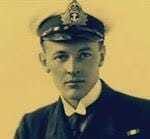
(Captain Edwin H. Dunning)
With his engine sputtering and escape routes cut off, Dunning’s odds of survival dropped to near zero. But instead of surrendering, he performed an unprecedented maneuver that left his enemies—and later, the aviation world—in awe. Known as the Falling Leaf maneuver, it involved a vertical corkscrew descent where Dunning appeared to lose control of his aircraft deliberately, making it seem as though he was crashing. This daring tactic exploited the limitations of his German pursuers, who couldn’t match his agility in such an unpredictable dive. The maneuver was not only risky but demanded near-superhuman skill. As Dunning descended over the battlefield, the Western Front skies became the backdrop for an audacious act of ingenuity.
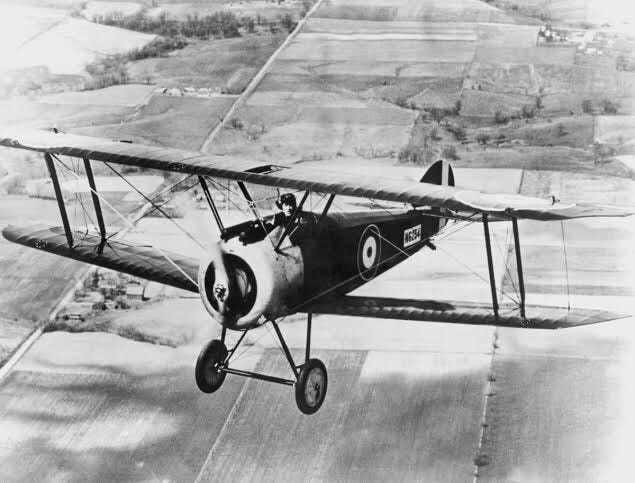
(The Sopwith Camel used by Captain Edwin H. Dunning)
Against all odds, Dunning’s gambit worked. The Fokkers, unable to follow his erratic movements, broke off pursuit, allowing him to glide his damaged Sopwith Camel to an emergency landing behind allied lines. His actions turned an inevitable loss into an extraordinary victory, demonstrating the untapped potential of creative aerial maneuvers in combat. But as remarkable as his story was, it was quickly overshadowed by larger narratives of the war. It wasn’t until decades later that aviation historians rediscovered the brilliance of Dunning’s maneuver, which is now studied in dogfight survival courses worldwide.
(The Falling Leaf demonstrated by a F-22 Raptor)
The Falling Leaf maneuver not only secured Dunning’s place in aviation history but also set a precedent for future air combat tactics. During World War II, ace pilots in the Pacific Theater unknowingly reinvented the same tactic while evading Japanese Zero fighters. This rediscovery underscored the timeless brilliance of Dunning’s ingenuity. In modern military aviation, where advanced technologies dominate the skies, this maneuver remains a testament to the power of human skill and instinct.
The Western Front skies of World War I were a crucible of innovation, forcing pilots to develop tactics that would later become essential in modern warfare. The Sopwith Camel, while revolutionary for its time, had its limitations, and Dunning’s ability to exploit its strengths under extreme pressure is a masterclass in adaptability. The Falling Leaf is more than just a story of survival—it’s a reminder that sometimes, the greatest breakthroughs come from the most desperate situations.
ADDITIONAL FACT :
The Falling Leaf maneuver requires an extraordinary level of control, as it involves deliberately stalling an aircraft while keeping it balanced during descent. Even today, it’s considered one of the most challenging aerial stunts to perform.
Incredibly, this tactic isn’t just limited to historical aircraft. Modern fighter pilots have used variations of the Falling Leaf during mock dogfights, proving its enduring relevance in air combat.
Conclusion:
Captain Edwin H. Dunning’s story is not just about one man’s courage under pressure—it’s a testament to the resilience and innovation of early aviators who turned the Western Front skies into a proving ground for ideas that would shape the future. From the Sopwith Camel to modern jets, the lessons of history continue to soar, inspiring pilots and enthusiasts to push boundaries, just as Dunning did on that fateful day.
Reply